The second season of Treme ended last month, and if you haven’t seen it yet, you really should set this story aside until you have. The series is unusual in many ways, not the least of which is its relationship to a specific city and a specific time. The intricacies of that relationship have prompted a small herd of bloggers to explicate and analyze scenes and stories. To put this season to bed, OffBeat rounded up some of the bloggers in our offices and via Skype (which worked better for some than it did for NPR’s Josh Jackson, who crashed midway through, never to return). Dave Walker of The Times-Picayune has done yeoman’s work writing what Ray Shea refers to as the “Walkerpedia,” providing backgrounds and explanations for some of the show’s references. Jackson and Patrick Jarenwattananon focused on Treme’s music for NPR’s “A Blog Supreme,” and Maitri Erwin and Ray Shea are part of the community of bloggers at Back of Town, a site that even David Simon visits on occasion.
What are your first thoughts on the season?
Patrick Jarenwattananon: Most people who I’ve talked to have enjoyed this season better than the previous one, and I think that might have to do with them working out their issues on how they process the narrative, and fielding more diverse musical selections throughout New Orleans.
Maitri Erwin: The season really focused on home a lot, whereas last season was about trying to get back. A lot of it focused on the music and contrasting that with crime in the city. It’s a pretty accurate representation for the most part, but in that last moment, everything wrapped up a little neatly for my taste. But that was me projecting what I want on the show, and a lot of us are guilty of that.
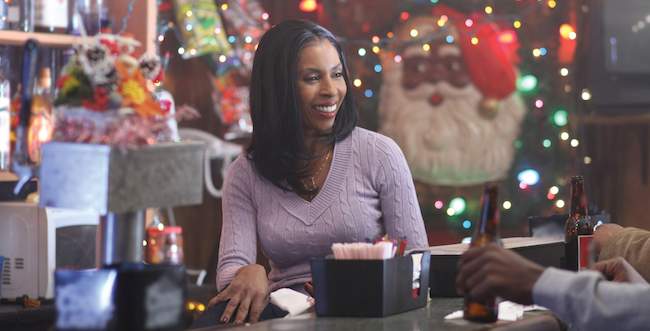
Josh Jackson: I was extremely impressed by Khandi Alexander’s performance as LaDonna, and it may have been the saving dramatic grace of the entire season. I think that she’s the most interesting character in the series as it pertains to my own personal peccadilloes.
Ray Shea: Last season that was very much about survival and trying to cling to traditions and what made New Orleans great in the past, which is where everyone was at the time in the city. In this season, you could see a lot of the characters not so much clinging to tradition as trying to reinvent the tradition. That was the year of the Unified New Orleans plan, all the redevelopment plans, so there was a sense that year that we switched from survival mode to rebuilding mode. You have Delmond doing his fusion of traditional and modern music and Janette doing her stuff with David Chang, and Davis—all taking the old and transforming it into something new, which is very symbolic of what New Orleans was doing that year.
Dave Walker: I thought as television, the show gave more viewers more entry points than it had in the first season. I’m thinking about Janette’s whole storyline leaping outside what the narratives had been for the show before that. I’m thinking of the hip-hop music and LaDonna’s storyline. As horrific as it was, it was a drama/television/film circumstance that you see all the time, and I think as great as her performance was, it was something that was familiar to television viewers.
The introduction of crime into the chronology gave folks who don’t really know or care that much about New Orleans another thing to latch onto and be pulled through the episodes, which can be very dense. So I think as a TV series, it succeeded more in the second season, but I don’t think the writers would ever admit they did it on purpose or to attract more viewers. A lot of it was the circumstance of the timeline, and a lot of it was what they wanted to show about the New York restaurant world and exploit the contributions of Anthony Bourdain, and a lot of people mentioned to me that they loved those restaurant scenes and the intimacy and delicacy of all that, and her life there.
What do we make of the character of Nelson?
Shea: You know when LaDonna goes off on her rant in the last episode and you realize that all these bad things have happened to people, but we don’t see the bad people [that made them happen]. We don’t see the bad person at State Farm screwing people out of their money in the first season. We don’t see what happened at the DA’s office that made LaDonna’s rape case go belly-up. We never saw who Liguori’s people were; we just saw the effects that they had on Nelson Hidalgo. We never saw who was getting him into these positions or giving him the money, and we never saw who took him out at the end.
This is how New Orleanians experience the dysfunction in the city all the time. It’s largely invisible. You can’t point to the person that fucked this place up. You can’t point to the institution that needs to be fixed; it’s all sort of inherently broken, and Nelson got to ride that wave until it broke underneath him as well.
Erwin: I think it also says something about how bent out of shape we were about the whole concept of the carpetbagger who came into New Orleans and was going to reshape the city into their idea of what is “modern” and “efficient” and “good” in America. We said, “Leave New Orleans alone,” but here we see that Nelson enjoys New Orleans. He sees the amazing things about New Orleans, especially in his wonderful French Quarter balcony speech. Then you have him basically screwing us over with money from New Orleans and giving money to people from New Orleans in order to make these deals happen.
Walker: One of the things I liked about the Nelson character, and both of you sort of got at this, is that he dedicates himself to the transparent pleasures of New Orleans in a way that newcomers do. And it makes everything seem transparent when you realize that you can walk around with a drink. Then when you get slapped with the dysfunction, it’s that much more mystifying and disappointing.
I took a lot of pleasure in his journey of discovery of the tactile things that are great about New Orleans. The food, the music, Mardi Gras, Zulu, all of that. I also think that was a great entry point for viewers who got to take that tour with him. Aside from the socio-political or commercial things he did, I thought it was an interesting and smart thing the writers did with that character. Everybody else feels like they’ve been here forever; here are a pair of new eyes.
Except for the way he profited on human misery, he’s everybody who came for Mardi Gras or Jazz Fest and stayed. My single favorite scene of the whole season is the one where he’s got a naked woman on his couch and he’s watching cartoons on a Sunday morning, and trying to get her to watch.
Jarenwattananon: I think Nelson’s character was the most like the ones we’d see on The Wire in that he’s the vehicle for an unstoppable capitalist force. He doesn’t really produce any tangible goods; he’s just the person who makes money out of more money. And you sort of see the end-product of such an economic transition system. He’s also given such moral ambiguity that you or I can identify with his motives, but he’s just a doomed pawn of the schemes, powerless to stop his downfall.
At PopMatters.com, Will Layman wrote that David Simon hates modern jazz. Josh, did this season say that to you?
Jackson: If that’s what you’re taking away from two seasons, you might be missing other more important things entirely. Obviously, Donald Harrison is a modern jazz artist.
I hate to get caught in this polarity between what’s traditional and what’s modern; there are a lot of musicians who are both. There are traditions that they’re dealing with, but they’re making music now.
Erwin: I’m curious, how well-received was the Donald Harrison jazz/Mardi Gras Indian fusion album [Indian Blues]?
Jackson: That album came out in the early 1990s on Candid Records; it had very limited distribution. I think that it was fairly well-received.
Layman talked about Delmond being selfish and distant, and it made me wonder if he watched the same show I watched. I wonder if it’s a function of the way characters are created, with enough ambiguity for people to read them in different ways from us.
Walker: I think the natural tendency is for viewers to observe and make judgments on characters line-by-line, and over and over this show has proven this to be a big mistake. They’re laying the foundation for a story that may be two seasons away. People could not stand Davis early on in Season One. Sonny was an utter villain. Both of them had redemption this season. Delmond was presented as a selfish young guy pursuing his own life and character, and by the end of Season Two he becomes his father’s son in every way he was resisting before, so I think it’s an accurate observation.
That is one of the problems with the serial-recap-deconstruction of the episodes, which is one of the reasons I resisted it. Having seen The Wire, and having seen the way the stories are knit over full seasons or the full five-season run of the show, I think it’s reckless, although human and natural, to draw those conclusions right away. The creators of this show have demonstrated that they’re not following the script that most TV dramas follow as far as introducing characters.
Shea: With Sonny, it surprised me that of all the characters people would think would be one-dimensional and irredeemable, and knowing what David Simon has done these past 10 years, they would pick the junkie as the one who won’t have any redemption at all. David Simon’s been writing about junkies for a very long time, and very compassionately.
What was the most compelling storyline this season?
Erwin: It had to be LaDonna’s rape and dealing with the criminal justice system, and her breakdown and resurgence towards the end. Her whole experience and feelings afterward really hit home with me.
Jarenwattananon: I haven’t really tried to rank storylines. It seems like the whole point of the show is that there’s so many of them and they all intersect and not to give any of them priority over the others.
One of the criticisms people have made of this season is that it seems like it treated all storylines equally. Is that a valid criticism?
Walker: It is a really democratic way of storytelling, and very unusual in TV films or drama. Shows get packaged with stars for reasons that have nothing to do with the story, and those stars get the screen time because it’s negotiated in advance. This is driven by writers who are putting fictional characters in a real place at a real time with lots of real people, and it may be the greatest tragedy of the show that many of them may never meet significantly. They’ve had some clever scenes where characters will intersect briefly, but even the actors say they’re frustrated by the fact that they rarely get to work with or even see their fellow cast members. That’s just a function of the way they’ve decided to tell the story.
I’ve written that I love Annie’s storyline because it was a great vehicle to see all these different musical styles. I think she’s a very sympathetic character, and I think Lucia [Micarelli] is a great musician. I do agree, however, that Khandi’s performance was stunning. And India [Ennenga] and Melissa [Leo]—I’m sure many of their scenes together resonated with local viewers who lived through those times with young people in the house.
Shea: This isn’t traditional, storyline-driven television, where at the end of the week the guy gets the girl or the bad guy gets caught. It’s much more akin to literary fiction, where the characters are at conflict with themselves or their environment, and the character transition is an internal thing. I’ve read where people compare Treme to Robert Altman films like Short Cuts, which was three hours long and blended a dozen Raymond Carver short stories into this little, intertwined thing that spans a few days in LA. I don’t know how people can compare Treme to Altman and not do the math and realize that’s what this sort of character-driven drama looks like when you translate it to long-form television. You’re not going to get a resolution to every story arc every week. This is a 10 or 11-hour long movie; you’re watching a little bit at a time. If you watch 20 minutes of an Altman film every week, you’d get the same experience where you don’t really know how it’s all going to resolve until the end of it.
To me, one of the interesting things about Treme certainly of this season, is the ways in which it’s unlike other television. One criticism of the show is that all the musicians talk about is music and the way they do it is obnoxious. We’re accustomed by television to think people talk with Aaron Sorkin-esque glibness, so when we run into characters who are preachy like Harley, and who say stupid stuff like Davis—television doesn’t usually give us that, so viewers react badly.
Jarenwattananon: Talking about the dialogue in music scenes, I found some of those scenes awkward myself. I think it’s somewhat accurate that musicians in general say things like “chops” and “cat,” but some of the scenes seemed to be actively trying to dramatize “Jazz Issue” with capital letters. Some of this writing reduces these really complex issues into Sorkin-esque writing at some points, which is strange because music is such a strength of the show. Then again, a lot of musicians and a lot of people who like music really like the show, and those back-and-forths between tradition and innovation resonated with them.
Shea: If you’re watching a program where the topic and characters are something that you’re involved in in real life, you know too much and you can see the moving parts in the dialogue, and that makes it hard to suspend disbelief. Some people from New Orleans have this thing where if someone makes reference to red-beans-and-rice-and-it’s-not-even-a-Monday, people laugh because it’s obvious, but, people talk like that all the damn time here. You hear it coming out of an actor’s mouth, it sounds like a cliché because you know it’s a cliché.
The Wire had the same awkwardness, but you don’t notice it the first time you see it because it’s an unknown environment—FBI and wiretaps—but after a while, you start to notice the speeches and the awkward copspeak moments that don’t really exist. With Treme, because we’re so close to it right out of the gate, we see it a little faster.
For me, one of the great musical moments was Jonathan Batiste’s piano solo early in the season when he’s playing with Delmond in New York. I don’t remember a musical moment in the rest of the series as intense as him attacking that piano. I wanted more moments that that are magical, but I realize Treme may play more magically to people who aren’t from here.
Walker: The thing that’s interesting to me about the music is that it always appears to advance something in the story, either a scene that had already happened or was going to happen. A lot of the music is as important as what the characters are saying around it. That’s something a lot of the viewers don’t understand because they’re not familiar with the music or they’re not familiar with the artist. They’ve really got to work to find the lyrics, but that’s an additional driver of the drama for the show.
Plus, it’s great performances, and that’s another thing that no one has ever done on television: live music performances. Most of what you hear in a live setting on the show is actually a live recording, and that’s never done on television.
Shea: A lot of the song choices, the lyrics to whatever is going on in the background are often like a harmonic dialogue line going on. When Antoine and LaDonna had that big fight in the bar near the end of this season, in the background on the jukebox is Otis Redding’s “A Thousand Miles Away.” You listen to the lyrics of that song by themselves and then you watch that scene over again—it’s heart-breaking to think that these two people used to be married and had two children together, and now they’re so fiercely angry at each other, and she’s in so much pain, and he doesn’t see it. That song is saying the exact same thing as what they are saying to each other, but it’s Otis Redding’s words doing it. And they do that on the show all the time.
Erwin: The Aunt Mimi/Lil’ Calliope story line initially bothered me: “When does a rapper from the hood get to be great friends with this lady Uptown?” But these things do kind of happen in New Orleans sometimes.
Jarenwattananon: I thought the Mimi/Don B./Lil’ Calliope story line actually ended up working quite well in that Davis ended up with egg on his face as the Uptown, rich boy who was trying to claim some sort of authenticity in it. And yet, he also came from such a genuine place that they actually made some of those arrangements work as music.
Erwin: There’s New Orleans rap, which is not bounce right? I think that they put a lot more emphasis on the bounce, trying to get exposure to Katey Red, and Big Freedia, and all these bounce big wigs. Sometimes it worked because I’m partial to bounce, but sometimes I felt like it was kind of forced in, “Okay, now we’re gonna have two minutes of ass-shaking.”
Shea: I had no problem with that.
Bounce worked for me because I think the “preserve everything” spirit that followed Katrina had people grabbing everything that was once a part of New Orleans. Suddenly, everyone wanted to talk about bounce.
Shea: It’s like Hubig’s Pies. Hubig’s Pies became these mystical things for a while, and that was reflected on the show because we thought they were gone.
Somebody on Back of Town pointed this out, which I thought was kind of clever, that Aunt Mimi basically sold Lil’ Calliope out to Cash Money Records, and somebody asked if the bar that they were sitting in when she pulled that check out was anywhere near where any of the slave markets in New Orleans used to be. We like Aunt Mimi. She’s one of the more endearing characters on the show, but there’s a little bit of that white-business-person-just-made-a-big-profit-out-of-yet-another-black-New-Orleans-musician, which has been going on for almost a century. It’s really the story of a lot of R&B from the middle of the 20th Century. A lot of people got rich off of that music and it wasn’t the musicians, and Mimi dramatizes that.
I hadn’t thought about this until you said that but with a better demeanor, Mimi is Nelson. She invested money and then figured out how to back the project, and sold the project. She just did it with out being quite so nakedly opportunistic or throwing people out of their houses.
Erwin: I thought Mimi actually did something more tangible than Nelson did. She helped these musicians get off the ground and Calliope got all this press. What happened in the end kind of bothered me too, but Calliope got his single out there.
Walker: That journey started with her indulging Davis. And my takeaway is that she basically broke even, given all the expenses that Davis piled up. And if she didn’t break even, she just maybe got a little richer. My takeaway wasn’t that she was ever involved to make money.
The other thing I want to say about her being in this world and the incongruity of that is that I can’t count the number of people of her generation who will recall that the giants of New Orleans R&B played at their prom. “Dr. John played at my prom.” I can’t tell you how many times I’ve heard that. “Irma Thomas played at my prom.”
We’ve been at this for an hour now, so let’s conclude with some final thoughts.
Erwin: I’m really interested in how they ended Season Two. There were so many places they could go. LaDonna and Larry are back in New Orleans, but is that wrapped up? Is she done for the season? What’s going happen with the Colson deal? I really want to see more of that pre-Danziger stuff go down. Somebody wrote on our comments that they wrote the last episode almost as if there wasn’t going to be a Season Three.
Jarenwattananon: It does seem like some characters have almost been written out of the show by the end of this season. Like what happens to Antoine? Does he just go back to his life as a schoolteacher and a broke-ass trombone player? Where do all of these narratives that tie up neatly end? Davis is guaranteed to start some hare-brained scheme for next season too. You’ve got to have faith in the writing staff to figure it out.
As Dave said earlier, it’s very unconventional television. They’re not making television with any formula in mind, but that doesn’t mean it still can’t be good television. I think they’ve refined how to tell stories in this ensemble cast in a multi-narrative, multi-threaded way this season.
Shea: I sort of agree with Maitri that things closed up very fast at the end of this season, but that happened on The Wire for almost every season as well. I remember I watched the first season when it was on TV and I thought, “Oh look, it’s all over. I thought it was a series, but I guess it was sort of a miniseries.” Then I found out there was going to be a Season Two, and I thought, “How is there going to be a season two? All the bad guys are in jail. There’s no more Major Crimes Unit. McNulty’s on the boat. How can you possibly have a Season Two?” When actually there were five seasons spinning around in their heads.
There are also limitations as to how much you can analyze this show by looking at it an episode at a time; there are also some limitations to looking at it a season at a time because they’ve got five seasons rattling around in their heads. Some of this stuff that’s happened the past two seasons, we’re not going to see the payoff unless we get to see Seasons Three, Four and Five actually get produced. I hope we get to see all five seasons because you can see this ending up with the oil rig blowing up and Brandon Franklin getting killed and all of these things that sort of bring the entire story full circle. Since we know the history of what happened, we can see some of the arc already which is different from The Wire, which was all fiction.
Walker: A lot of what we saw in episode 11 simply has to do with the mechanics of how the show got made. The pick-up for season three came while they were shooting episode 11. It was fully scripted. They had no idea when Simon and Bourdain wrote that script that they would get a third season. As Ray pointed out, that was exactly same circumstance for every season of The Wire. They had to conclude a season with the very real possibility that that would be the conclusion of the series. They had hoped there would be a third season of Treme, but they didn’t know for sure until May 13. On May 12, they were shooting the scene where Janette was at the David Chang restaurant. I think they had three or four days to go before they wrapped at that point, so the concluding montage and the concluding resolution for some of the characters was just a way to put an envelope around Season Two while not limiting the possibilities for going forward. I thought episode 11 had the same powerful concluding half-hour that a lot of The Wire seasons had, where so much of what was introduced during the season was resolved—not neatly, in many cases—and that may be the way they go forward with a lot of the characters and storylines.
I think The Wire as a model is still valid because each season there introducing new characters and new players and new ideas. Hildalgo was introduced this season and David Morse’s character, we haven’t mentioned him at all but I thought he was stunning. I think the possibilities are really grand for Colson to continue as the crime element continues in the show, although I’m terrified of predicting anything with these guys because Keith Phipps, the guy who recaps for the Onion A/V Club, pointed out in his recap for episode 11 that of the six things he was sure would happen in this episode, none of them happened.
One quick other thing about the very subtle kinds of resolution that they have built into this show and in episode 11. Three of the main characters got to spend physical time with their character muses. Janette got to be with Susan Spicer, Delmond got to be onstage with Donald Harrison, Jr., and Davis got to be onstage with Davis at the end.
I look forward to Prince and the Revolution helping Annie finish her song.