Brian Wilson, who co-founded the band, The Beach Boys, has passed away at age 82.
His family confirmed this on Instagram, writing: “We are heartbroken to announce that our beloved father Brian Wilson has passed away. We are at a loss for words right now. Please respect our privacy at this time as our family is grieving. We realize that we are sharing our grief with the world. Love and Mercy.”
The Beach Boys began with Brian and his two brothers, Carl and Dennis. They were joined by their cousin, Mike Love, and a friend, Al Jardine. The band has sold over 100 million records worldwide. They were inducted into the Rock and Roll Hall of Fame in 1988.
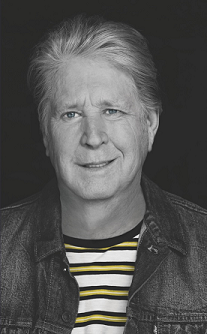
Photo courtesy of the artist.
In January 1963, The Beach Boys recorded their first Top 10 single, “Surfin’ U.S.A.,” which began a long run big hits including, “Fun, Fun, Fun,” “In My Room,” “Little Deuce Coupe,” “I Get Around,” “Help Me Rhonda,” “Don’t Worry Baby,” “California Girls” and many more.
Brian Wilson wrote “Surfin’ U.S.A.” as a tribute to Chuck Berry, inspired by his song “Sweet Little Sixteen” that namedropped U.S. cities. Wilson decided to do the same thing with surf spots in California. However, Berry sued for copyright infringement and the court ruled in favor of Berry.
By the ’60s, Wilson moved beyond the cheery, simple, teen-based formula that characterized much of the Beach Boys’ early music. The result was 1966’s Pet Sounds, which is ranked by many as one of the greatest albums of all time.
Paul McCartney has stated that “God Only Knows” from Pet Sounds is one of his favorite songs ever. He said it was the “greatest song ever written.” Beatles producer George Martin called The Beach Boys’ 1966 album Pet Sounds “a spur” for the Beatles’ game-changing concept album Sgt. Pepper’s Lonely Hearts Club Band. Wilson reportedly broke down and cried when he heard that album’s psychedelic breakthrough “Strawberry Fields Forever,” declaring, “They got there first.”
Wilson revived his career and released several solo albums in the 1990s. He was inducted into the Rock and Roll Hall of Fame in 1988, remarried in 1995, and was honored by the Kennedy Center in 2007 for lifetime contribution to the performing arts.
Brian Wilson was booked for the 2005 New Orleans Jazz & Heritage Festival. In preparation for his performance, OffBeat’s H. Andrew Schwartz, spoke with Wilson. Wilson told Schwartz “I want to be remembered as a person who was a versatile musician and made a lot of different music.” The following are excerpts from that interview:
Called one of the most influential pop composers of the last 50 years, Rock and Roll Hall of Fame inductee Brian Wilson and the Beach Boys (1988) are responsible for some of the most well-known songs in the pop canon—“California Girls,” “Surfin’ USA” and “In My Room” to name just a few. From 1962-1965 Wilson’s Beach Boys charted 16 Top 40 hits. All told, the group has netted 32 gold and platinum records with sales estimated upwards of 100 million. The British rock magazine MOJO named the Beach Boys 1966 album Pet Sounds number one of all time and Rolling Stone deemed it number two.
But deep beneath the Beach Boys’ success, fame and money, percolated Wilson’s creative genius, and a genuine belief that he could make spiritual and highly personal music devoid of pop pretensions.
In the past year, Wilson has fulfilled much of that promise as a solo artist. With the release of his most ambitious work to date, the reworked Smile album that he aborted in 1967, he’s lifted an albatross from around his neck.
2004’s Smile is Wilson’s ultimate work, complete with a transcendent sonic architecture that almost defies description. At once childlike, impossibly complex and altogether mind blowing, Smile has brought Wilson back into the mainstream of popular music.
His swirling, psychedelic instrumental off 2004’s Smile, “Mrs. O’Leary’s Cow” won a Grammy Award, a new Broadway musical called Good Vibrations based on Wilson’s music hits the Big Apple in December and he’s touring the United States and Europe this summer and into the fall.
OffBeat caught up with Wilson via telephone from his home in the Mulholland Estates in Sherman Oaks, California and in subsequent emails while he was preparing for his Jazz Fest performance. During the course of our interviews we found him willing to discuss the joys of making and performing music, and even some of the subjects he finds most uncomfortable: the death of his brothers Dennis and Carl Wilson, his past drug use, and his musical idol, Phil Spector, who will stand trial in September for allegedly shooting dead actress Lana Clarkson at his Los Angeles home. Jazz Fest is the first stop on Wilson’s tour and he couldn’t be more pleased.
For years you choose not to perform in public. Some said you were afraid to perform. Why are you touring now and playing such large venues as the New Orleans Jazz and Heritage Festival?
I get nervous, but I really enjoy it now. I’m excited to play Jazz Fest. I’m excited and looking forward to it.
Have you ever been to New Orleans?
I have been. I was on Bourbon Street. But I can’t remember when—it’s been awhile. [Wilson performed with the Beach Boys at Loyola University in the early ’70s.]
Are there any artists from New Orleans you have particularly enjoyed?
The Neville Brothers, I love their harmonies. I used to listen to Fats Domino. He wasn’t really a big influence over my music, but he was an inspiration.
You’re not exactly a conventional choice for the Jazz Fest lineup, although for several years Jazz Fest has been bringing in artists who are not normally associated with New Orleans or Louisiana. How do you expect to be received?
Well, hopefully they will like the Beach Boys songs that we do and the Brian Wilson songs, we might do a couple of songs off the Smile album, or we might do the whole Smile album. We’re not really sure what we’re going to do yet but I think we will be received very well. I think we’ll go over fine.
I’m sure you will. What Beach Boys songs are you going to play?
“California Girls,” “God Only Knows,” “I Get Around,” “Fun Fun Fun,” “Surfin’ USA,” “Barbara Ann”—those kinds of classic tunes.
Is a song like “The Warmth of the Sun” something you still like to perform?
No, I don’t like doing that song because it brings back a lot of bad memories. We wrote it for John F. Kennedy, and it brings back his assassination and it’s not a good memory. It is one of the best ballads I have ever written. There is some pain in there. I hope that the humor and spirituality of my music comes through in the performance.
Why is humor so important to you musically?
Humor—it helps to make the vibe better—it loosens up the vibrations.
Why is spirituality so important in your music?
Well, spirituality amounts to love with me. I consider it the same as love. And my band members are full of love.
You once told the British journalist Nick Kent that if you put music out that is spiritual, that has spiritual vibes in it, people are going to hear it. Do you still believe that?
Yeah, I do. I think it’s like [producer] Phil Spector’s records. I think it’s like, when people hear music that is spiritual it gets through. Music that is Godlike and loving gets through. I don’t have any power in this world, but I have spiritual power. I think God gave me my music and my talent. I’m trying to get across a feeling of spirituality; I think I have a spiritual influence on people. I think if we put out our hearts and souls in this Jazz Festival performance, we’ll get a serious, heart and soul reaction.
Phil Spector, the legendary producer, is currently facing a serious situation. Does it pain you? He’s been such an inspiration to you.
I don’t have any comment on that [long pause]. I feel a little bit confused. I can’t understand how he can be involved in something like that. It just doesn’t make any sense to me. He’s been the number one influence on me musically.
What is it about Phil Spector’s “wall of sound” recording technique and his production skills that has provided the template for your music?
It taught me how to make bigger and better records.
Can I ask you about your drug use?
Yeah.
Did drugs and particularly psychedelic drugs in particular help you search your soul?
A little bit. I realized I was deaf in my right ear, which made me search my left ear, and then when I started searching my soul I found out all kinds of things about myself that were really interesting. Like that I had more strength than I thought I had, and I was stronger than I thought I really was. I can take anything, I’m strong enough inside. I can take any kind of bad vibe or anything.
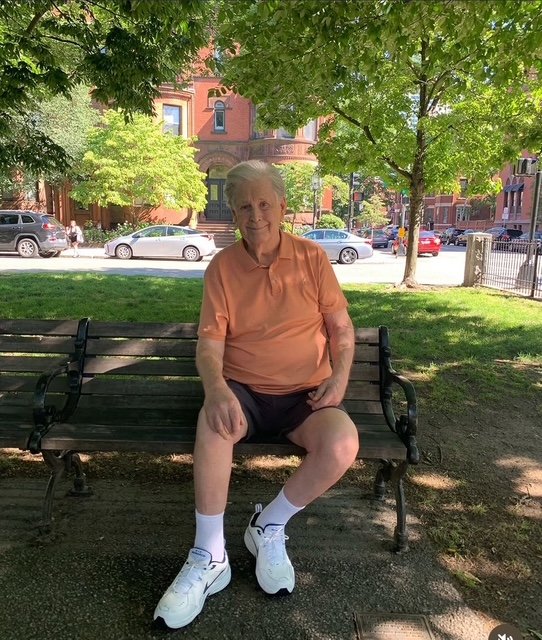
Brian Wilson. Courtesy of the artist.
Did drugs help your music or hurt it?
It helped it. Drugs helped it a lot—they made me concentrate more, psychedelic drugs.
“Cabin Essence,” “Wind Chimes” and “Mrs. O’Leary’s Cow” off of the reworked Smile record are about as psychedelic as anything the Beatles ever recorded. What role did your drug use play in creating these tunes when you first wrote them in the 1960s?
We smoked pot and hash when originally creating those songs [in the late 1960s]. It helped us get into the songs. I wouldn’t do it now.
So, you no longer use drugs as part of the creative process?
Ah…nah. Nah. It was just that one time in my life and that’s all.
You just won your first solo Grammy Award for the swirling, psychedelic instrumental piece, “Mrs. O’Leary’s Cow.” Were you surprised that you won?
I was very surprised that it won, I didn’t expect it to win but it did. I was very happy that it won. I don’t really know why it captivated the Grammy people, it was an interesting instrumental, and I think people thought it was very innovative.
Is there any one track off of Smile that is the most important track on the record to you?
For me, I would have to say “Surf’s Up” would have to be the most important one. It’s a very special song that Leonard Bernstein liked and the lyrics [in collaboration with lyricist Van Dyke Parks] are poetic and ingenious, it’s really one heck of a great song. We wrote the song in sections, three different sections. One day we wrote the verses, another day we wrote the bridges and then finished it on a third day.
I know what you mean; it’s a timeless, ageless song. You once said during the Pet Sounds era and also into your first attempt at the Smile album in the 1960s that you were trying to do “witchcraft music,” that you were trying to do witchcraft.
No, that’s not true. I was not trying to do witchcraft or witchcraft music; I was just trying to do something different and innovative.
It’s no secret that much has been made about your mental state over the years—maybe that is why the notions of witchcraft and other oddities have been mentioned. Are you in therapy now?
Yes, I am.
Is it helping?
It’s helping a lot, yes. The music helps, it gives me strength, and it makes me feel good and gives me a lot of inner strength. [Wilson told OffBeat that his past problems have been resolved largely due to the relationship he has with his wife Melinda Ledbetter. “She opened my heart,” Wilson said.
Speaking of inner strength, your brothers Dennis and Carl are both gone now, Dennis drowned accidentally in 1983, and Carl succumbed to cancer in 1998. Is it hard to be without your brothers?
No, no it isn’t. No. I don’t miss my brothers—I let them go. They’re gone so I let them go. I can’t hang on to my brothers because they’re dead. Life goes on with or without my brothers. They can’t sing anymore, they’re dead.
Are you thinking about God these days?
I think about God, yes, and I wonder if there is a God. And if there is a God, will God please help me through my hard trips.
Critics have said that you are as important an artist as Beethoven. How do you wish to be remembered once you are finished making music?
I want to be remembered as a person who was a versatile musician and made a lot of different music.
In January 2004, Wilson’s wife Melinda Ledbetter passed away.
In May 2024, it was revealed that Wilson was suffering from dementia following the death of Ledbetter. Wilson was placed in a conservatorship, with his publicist Jean Sievers, and manager, LeeAnn Hard, as his conservators. The family did not reveal his cause of death.