On the same day that the New Orleans Jazz & Heritage Festival announced the Jazz Fest “cubes” for 2026, the Foundation that owns the festival announced that it had parted ways with CEO Blake-Anthony Johnson after a relatively brief run in the role. Anthony was hired after a nationwide search for the role of Executive Director/CEO of the Foundation. He last resided in Chicago, where he was CEO of the Chicago Sinfonietta. This signals another shift in how the New Orleans Jazz & Heritage Festival & Foundation is structured at the top. In the interim, leadership has passed to Sarita Carriere, a longtime internal figure whose work behind the scenes has helped sustain the organization’s financial and operational stability for more than a decade.
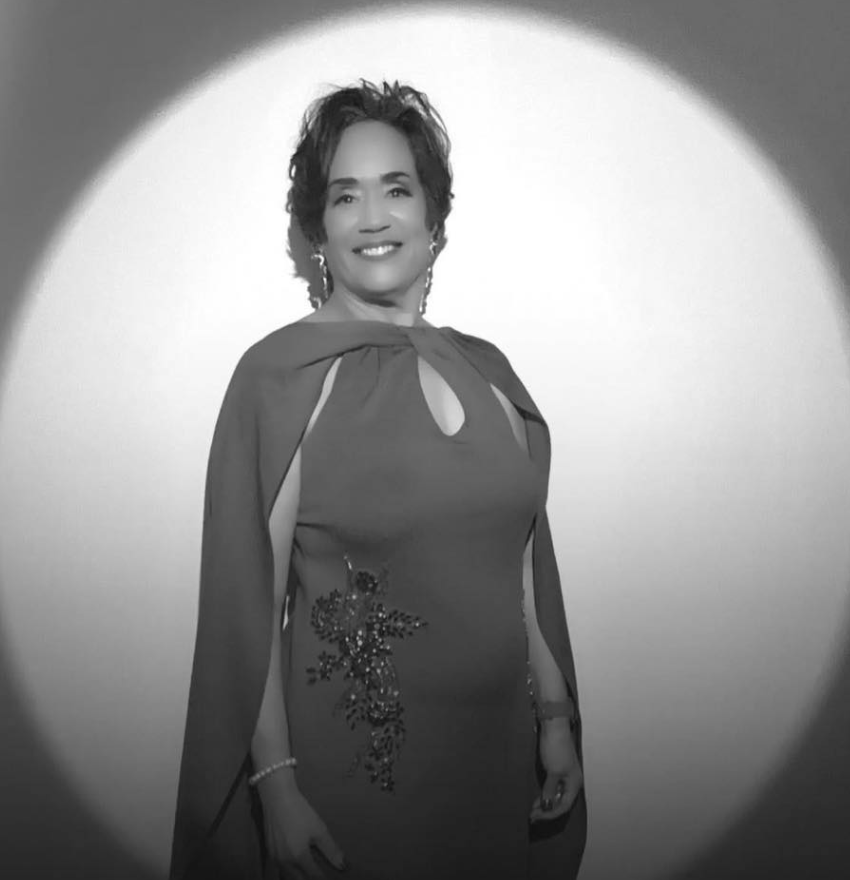
Sarita Carriere.
Carriere’s appointment comes at a time when institutional memory carries particular weight—especially in contrast to the era of Don Marshall, whose 21-year legacy continues to loom large over the Foundation’s identity.
Marshall, honored with an OffBeat Best of The Beat Lifetime Achievement Award in Music Business, built a reputation over nearly 50 years as something of a cultural “fixer” in New Orleans. He is known an administrator repeatedly called in to stabilize struggling arts organizations and guide them back to viability. Before arriving at the Foundation in 2004, he had already led turnarounds at institutions like the Contemporary Arts Center and Le Petit Theatre, and played a key role in launching the Tennessee Williams & New Orleans Literary Festival, each time stepping into environments facing financial or structural challenges.
When he took over the Jazz & Heritage Foundation, the situation was similarly precarious. The organization was carrying roughly $1.2 million in debt, and even the future of its relationship with longtime producer Quint Davis and Festival Productions Inc.-New Orleans was uncertain. Rather than dismantle that partnership, Marshall helped reinforce it—ultimately paving the way for a major collaboration with AEG Presents that brought in underwriting support, larger-scale talent and new sponsorship opportunities that reshaped the festival’s financial trajectory.
His leadership style emphasized collaboration over disruption, a philosophy that proved critical during moments of crisis. After Hurricane Katrina, when other cities attempted to lure Jazz Fest away, Marshall and his partners insisted on keeping it in New Orleans—despite massive logistical hurdles, from displaced staff to scattered musicians. The decision reinforced the Festival’s role as a cornerstone of the city’s cultural and economic recovery.
Beyond the festival itself, Marshall’s tenure dramatically expanded the Foundation’s reach. He spearheaded the launch of multiple free, community-centered festivals, including the Cajun & Zydeco Festival, Congo Square Rhythms Festival and Tremé Creole Gumbo Festival, creating year-round platforms for Louisiana musicians. He also revived and scaled grantmaking initiatives that support culture bearers, from Mardi Gras Indians to Social Aid and Pleasure Clubs, while increasing national visibility for traditions that had long existed outside the mainstream.
Education was another defining pillar of his work. Drawing on his background as a professor at University of New Orleans and Southeastern Louisiana University, Marshall helped develop programs that treat music as both heritage and opportunity with tuition-free instruction at the Don “Moose” Jamison Heritage School of Music, to initiatives like Class Got Brass, which funds school-based music rooted in local traditions. His oversight also extended to the creation of the George & Joyce Wein Jazz & Heritage Center, a hub for performances, education and community engagement.
By the time he stepped down after the 2024 festival, the Foundation had evolved from a festival-adjacent nonprofit into a year-round cultural engine, distributing millions annually in grants, programming, and educational support.
That legacy casts a long shadow over the present moment. While the festival itself remains structurally insulated (still produced by Festival Productions New Orleans and supported by AEG) the Foundation’s internal leadership has entered a more fluid phase.
With Carriere now guiding the organization on an interim basis, the Foundation appears to be returning, at least temporarily, to the kind of steady, internally grounded leadership that defined Marshall’s era at a time when the balance between cultural stewardship and organizational evolution remains very much in flux.