OffBeat contributing writer John Radanovich will have a release party for his new book, Pérez Prado: King of the Mambo on Thursday June 18 at The Broadside (600 N Broad St), featuring special musical guests, Charlie Halloran and the Tropicales.
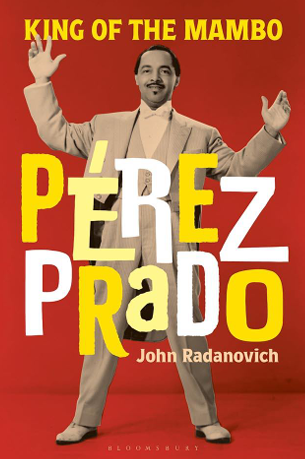 Journalist Radanovich reads from his brand-new biography of the Cuban bandleader known as the King of the Mambo, Pérez Prado. The most famous Cuban musician to perform the exciting and influential mambo, Perez Prado was born in Matanzas, Cuba, home of danzón—the style that contributed to early jazz in New Orleans and provided the base of mambo. Prado became an international sensation in Mexico City in 1949 when his “Mambo No. 5” (covered by Lou Bega) and “Que Rico Mambo” blazed their way through the airwaves first in Mexico and Latin America and then as a major force in the United States. The author will discuss the Cuban’s life and work in the classic Mexican noir cinema called cabareteras, and the beautiful women dancers known as the rumberas, like Tongolele and Ninon Sevilla.
According to Bibliolore.org:
Pérez Prado’s music and dance style gained widespread popularity in Latin America, especially through his appearances in numerous Mexican films during the early 1950s. As a result, he quickly earned the title of the “King of Mambo”. As the mambo gained traction across the Americas, different regional styles began to emerge. In New York, artists like Machito and his Afro-Cubans, Tito Puente, and Tito Rodríguez helped shape the genre’s evolution. Mambo became a mainstream sensation, especially with the release of Papa loves mambo (1954) by Perry Como, which was followed by covers from iconic artists like Nat King Cole and Bing Crosby.
While the popularity of mambo seemed to decline after the rise of the cha cha cha, it remained a lasting cultural force in certain places. Mambo became much more than just a syncopated rhythm or a new style of dancing—it evolved into a cultural phenomenon that left a significant impact on popular culture. The genre found particular success in cinema, especially in the soundtracks of various popular films, including the 1954 film Mambo, directed by Robert Rossen. Mambo’s influence continued to grow in Europe, especially after its association with Federico Fellini’s iconic 1960 film La dolce Vita; mambo also appeared in the first act of West Side Story (1957) by Leonard Bernstein.
Pérez Prado: King of the Mambo also examines the little known yet transformative role Cuban rhythms played in 1940s and 1950s New Orleans R&B music by Paul Gayten, Professor Longhair, Dave Bartholomew, Fats Domino, as well as on Louis Jordan, Ray Charles, and all the rock and roll that followed.